When planning a pregnancy, whether naturally or through fertility treatments like In-Vitro Fertilisation, healthy eggs plays a crucial role. Understanding what defines a healthy egg can help couples prepare, make informed choices, and improve their chances of success. This article shares seven important facts about healthy eggs that everyone trying to conceive should know.
Definition of a healthy egg during the journey to pregnancy
A healthy egg is mature, chromosomally normal, and has a strong, intact cellular structure. These features are vital for successful fertilisation and the development of a healthy embryo. Eggs that are immature or have chromosomal abnormalities are less likely to result in a healthy pregnancy and can lead to miscarriage or implantation failure.
The influence of egg quality on embryo growth and pregnancy outcomes
Egg quality directly impacts the strength and development of the embryo. A healthy egg provides the cellular material and energy needed for early division and growth.
Poor-quality eggs may lead to embryos that fail to implant or stop developing. In contrast, good-quality eggs are linked to stronger embryos, better implantation rates, and a reduced risk of miscarriage.
The role of a woman’s age in egg health and fertility potential
A woman’s age is one of the key factors affecting egg health. Women are born with a set number of eggs, and both quantity and quality decline over time.
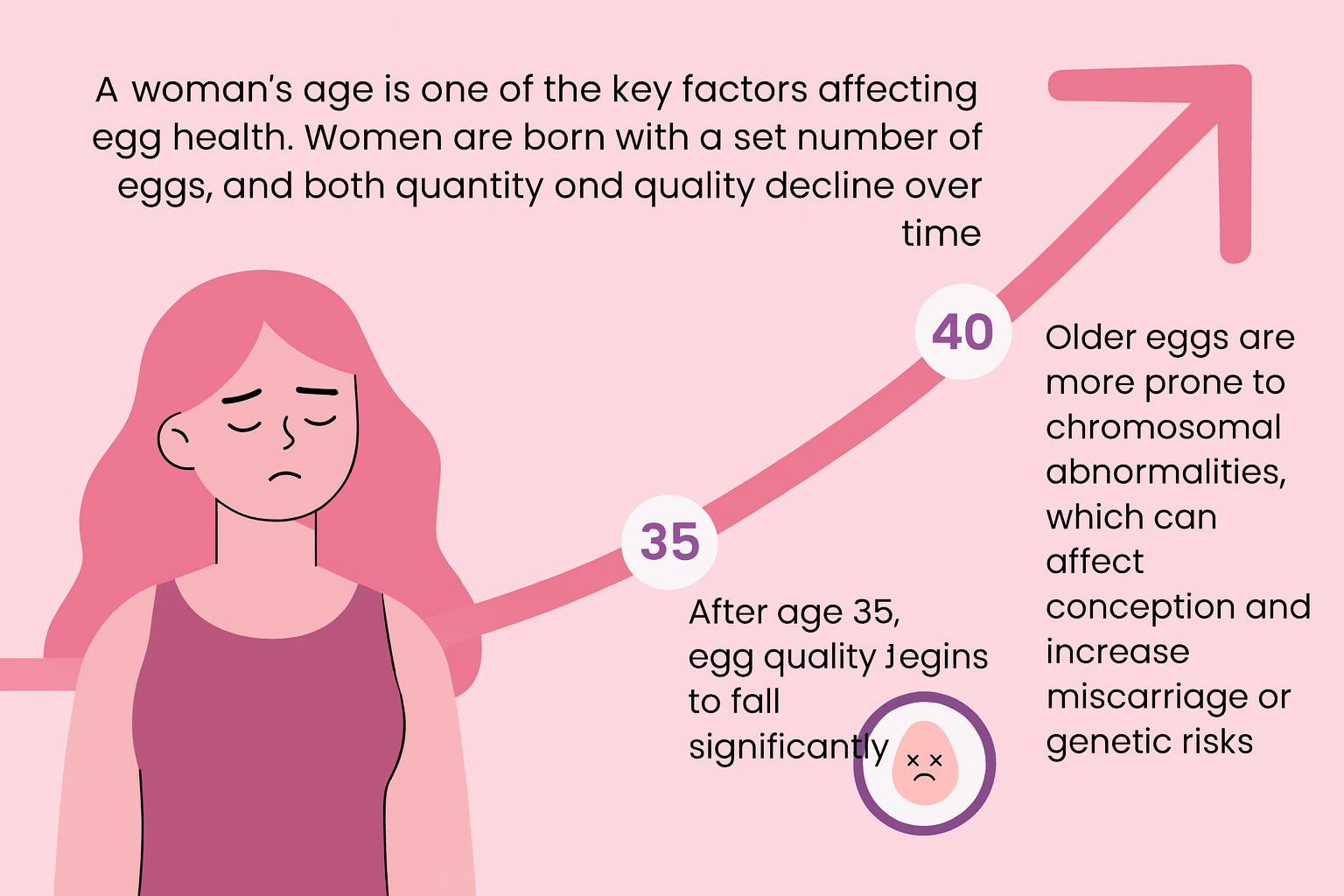
After age 35, egg quality begins to fall significantly, and by 40, the decline is more pronounced.
Older eggs are more prone to chromosomal abnormalities, which can affect conception and increase miscarriage or genetic risks.
The ideal number of healthy eggs for higher pregnancy success rates
In IVF, specialists aim to retrieve enough mature eggs to give the best chance of success. Research shows that collecting 8 to 15 mature eggs during one cycle provides a good balance.
This number increases the likelihood of creating viable embryos while keeping the risk of ovarian hyperstimulation syndrome (OHSS) low.
The ideal count can vary based on age and individual health factors.
Contribution of healthy eggs to implantation and pregnancy success
Healthy eggs are more likely to create embryos that successfully implant into the uterus. Strong embryos continue to grow after implantation and support a healthy pregnancy.
On the other hand, embryos from poor-quality eggs may not attach properly or may stop developing early. This highlights how egg health is key to carrying a pregnancy to term.
Lifestyle habits that support the production of healthy eggs
Lifestyle choices can help maintain egg health. A balanced diet rich in antioxidants, vitamins, and minerals helps protect eggs from damage.
Regular exercise encourages good blood flow to the ovaries. Avoiding smoking and alcohol is vital as both can harm egg quality.
Managing stress and maintaining a healthy weight also support better reproductive health.
Seeking fertility advice for egg health and pregnancy planning
Couples should seek expert advice if trying to conceive for over a year without success (or six months if over 35).
Those with irregular cycles, endometriosis, or past pelvic infections should consider earlier assessment. Fertility specialists can check egg reserve and quality using tests like AMH levels and antral follicle count.
Early consultation helps address concerns and plan the best way forward.
Conclusion
Healthy eggs play a central role in pregnancy success. By understanding what makes an egg healthy and how to protect egg quality, couples can improve their chances of conceiving naturally or through IVF. Staying informed and making positive lifestyle choices are vital steps on the fertility journey.
If you are concerned about egg health, fertility, or planning IVF treatment, it is important to consult experts who can guide you through your journey. We encourage you to consult our fertility specialists for personalised advice and support by visiting